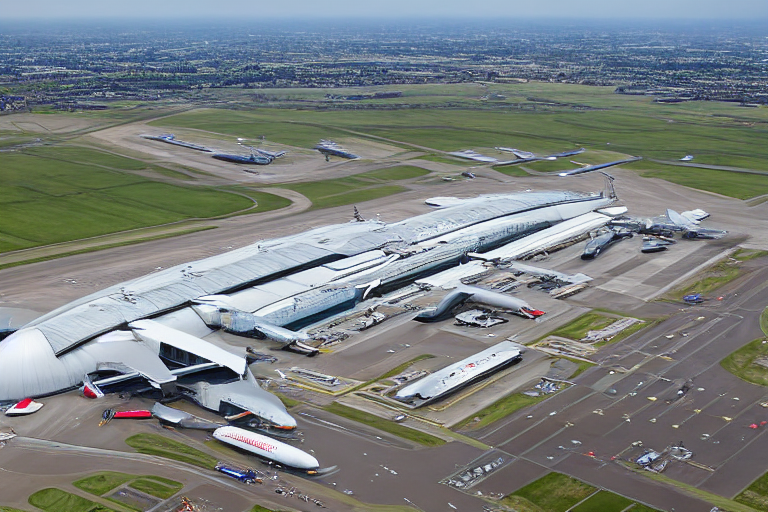
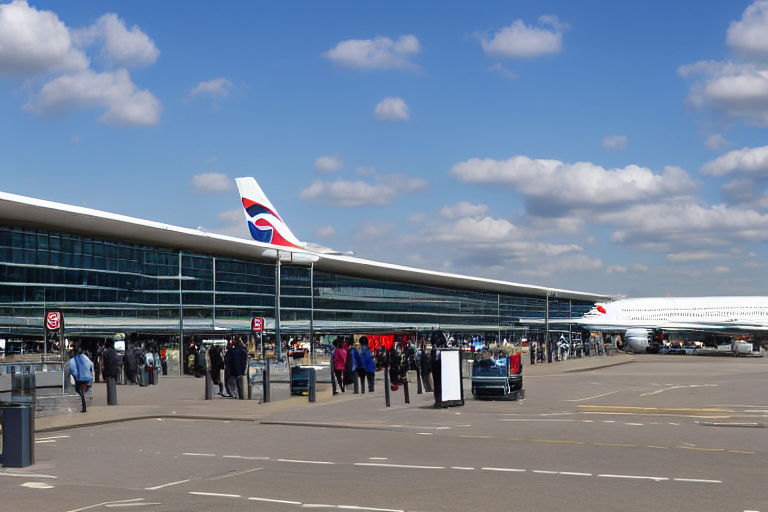
“Heathrow Airport Review – London’s busiest hub.”
**Heathrow Airport Review – London’s Busiest Hub**
Heathrow Airport, nestled in the western suburbs of London, is the busiest airport in Europe and a major global aviation hub. Serving millions of passengers annually from all over the world, Heathrow exemplifies the grandeur and complexity of modern air travel. As one of the largest airports globally, it’s a testament to the ingenuity and resilience of human engineering that it continues to operate efficiently despite its monumental scale.
## The Grandeur of Terminal 5
Amongst the many terminals at Heathrow, Terminal 5 (T5) stands out as a marvel of modern architecture. Designed by renowned architect Sir Norman Robert Rogers, T5 is an iconic structure with a distinctive design that has become synonymous with Heathrow. Its smooth, aerodynamic curves and sleek lines reflect the fluidity of air travel itself. The terminal is equipped with state-of-the-art security systems, spacious lounges, and a plethora of dining options catering to various tastes.
Upon entering T5, one is immediately struck by its size and functionality. The concourses are meticulously designed to guide passengers through their journey efficiently, from check-in to baggage reclaim. The airport also boasts a variety of shopping outlets, offering everything from high-end designer brands to local delicacies. The terminal’s layout ensures that there is always something for everyone, making the experience both enjoyable and convenient.
## Connectivity and Accessibility
One of Heathrow Airport’s greatest strengths lies in its connectivity. The airport serves as a gateway to the United Kingdom and beyond, with flights connecting to destinations across Europe, North America, Asia, Africa, and Australia. This extensive network of routes means that passengers can reach almost anywhere in the world from Heathrow.
The airport’s accessibility is another notable feature. Located on the western edge of London, Heathrow is easily accessible by road, rail, and public transport. There are numerous car parks available for those driving, including a long-term car park with 12,000 spaces. For those using public transport, Heathrow offers an extensive network of buses, trains, and taxis that connect it to central London and other parts of the country.
The airport’s proximity to major motorways such as the M4 and M25 makes road travel convenient for millions of passengers each year. Additionally, the Heathrow Express train service provides a direct link to Paddington Station in Central London, with journey times of around 15 minutes. The AirportXpress connects Heathrow to several central London stations, including Victoria and King’s Cross St. Pancras.
## Passenger Services and Amenities
Heathrow Airport prides itself on providing excellent passenger services and amenities. This is particularly evident in the extensive range of lounges available to both frequent flyers and budget-conscious travellers. There are over 20 lounges at Heathrow, offering everything from basic comfort to premium experiences with gourmet dining, spa facilities, and complimentary Wi-Fi.
The airport also places a strong emphasis on sustainability, with initiatives such as its Heathrow Airport Carbon Management Plan aimed at reducing its carbon footprint. This includes the use of renewable energy sources and efforts to improve fuel efficiency in ground operations. The airport’s commitment to sustainability is reflected in various eco-friendly practices throughout the terminal, such as water-efficient fixtures and recycling stations.
## Challenges and Future Plans
Despite its successes, Heathrow Airport faces several challenges that it must address in order to continue operating efficiently. One of the most pressing issues is the need for expansion due to the growing demand for air travel. The airport has been grappling with this problem for years, with numerous proposals for third runways and terminal extensions debated by the UK government and local communities.
The airport’s role in addressing climate change is another critical challenge. As a major source of greenhouse gas emissions, Heathrow must find innovative ways to reduce its environmental impact while still serving its vital function as a global hub. This includes exploring new technologies for ground operations, such as electric aircraft, and investing in renewable energy sources.
In conclusion, Heathrow Airport stands as a testament to the remarkable achievements of modern air travel. Its grandeur, connectivity, passenger services, and sustainability efforts make it a true icon of aviation. While challenges remain, Heathrow continues to evolve and adapt to meet the changing demands of global travel. As one of London’s busiest hubs, it remains an essential part of the city’s identity and a crucial gateway for millions of passengers each year.